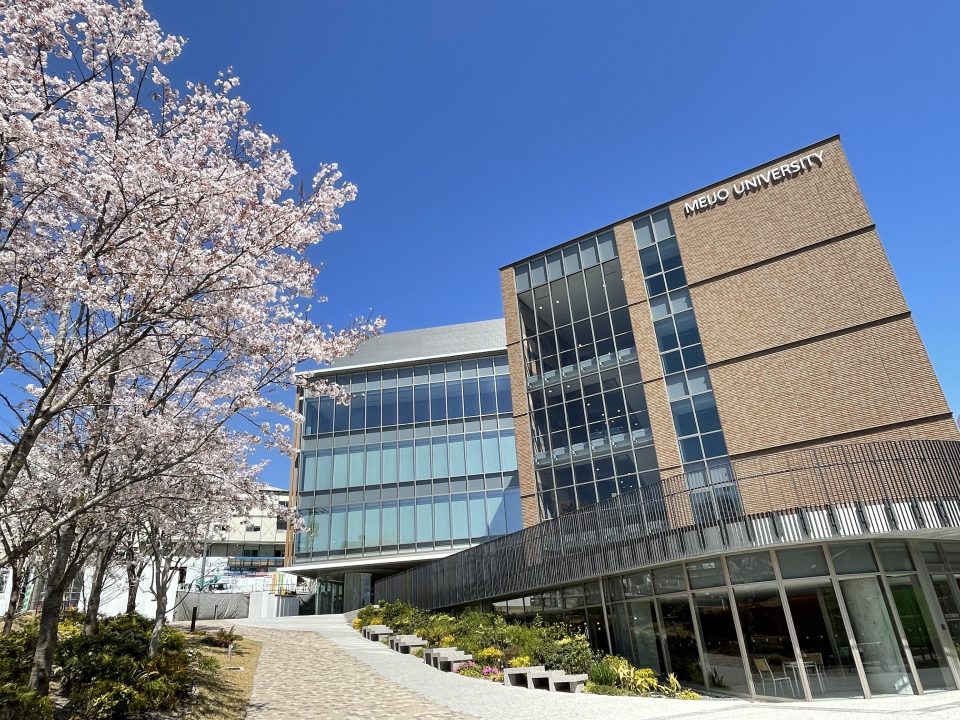
At Meijo University, the Department of Information Science was established within the Faculty of Science and Technology in 2000. In 2022, the Faculty of Information Engineering was launched as the university’s tenth faculty. Then, in April 2026, the Graduate School of Information Engineering was officially established after years of preparation.
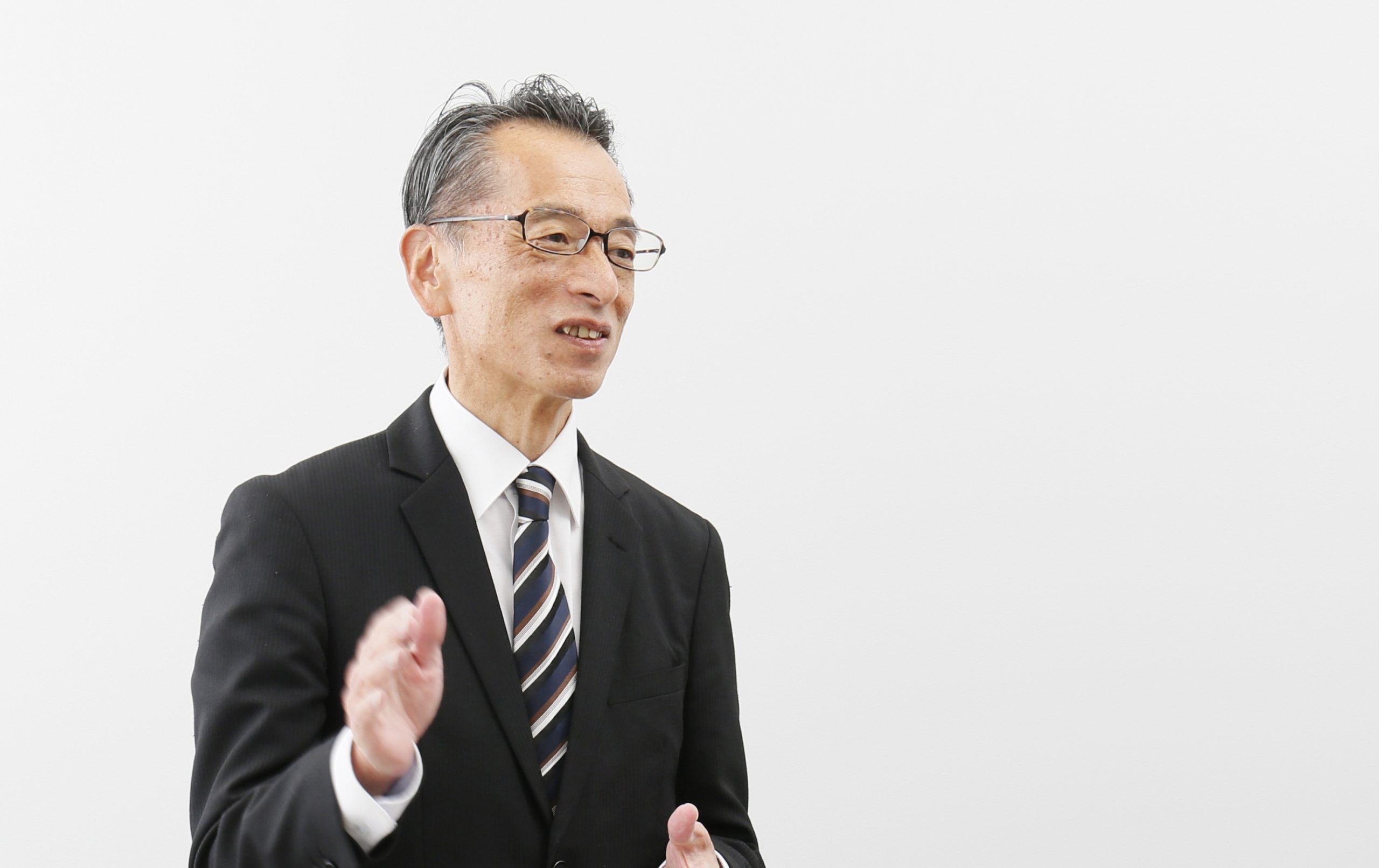
To mark the opening of the new graduate school, we spoke with Professor Yuji Sagawa, Dean of the Graduate School, about the significance of pursuing graduate studies and the program’s goals.
Professor Yuji Sagawa
What is the significance of continuing one’s studies for six years rather than stopping after the four-year undergraduate program? In an era when generative AI can perform intellectual tasks on our behalf, does society still seek people with a master’s degree?
Precisely because we are entering an era in which generative AI can take over intellectual work, I believe expectations and demand for people with a master’s degree will continue to grow, as they are the ones capable of achieving higher levels of intellectual productivity.
What kinds of students go on to pursue a master’s degree? Are they mostly top-performing students or people aiming to become researchers?
There are certainly students like that, but many others come from very different backgrounds. Some may not have outstanding grades, yet simply enjoy working with computers or creating things. Others may not necessarily aspire to become researchers, but hope to develop, through research, the ability to identify the essence of problems and find ways to solve them. Students entering a master’s program have a wide range of motivations and goals.
In the first year, the advancement rate through faculty recommendation rose to 35% for the first time. In the past, there were periods when it was below 20%. What goals do you have moving forward?
Ideally, I would like to see the rate eventually reach around 70–80%. But first, I hope to bring it to the point where at least half of the students continue on to graduate school, where pursuing further studies becomes the majority path.
I understand that the program plans to actively accept students not only from other universities, but also graduates from different academic fields. Could you explain the reasoning behind this policy?
Information technology now affects every industry through digital transformation (DX), and, through AI, it influences virtually all areas of human activity. Given that reality, wouldn’t it actually be strange if the people responsible for these technologies came only from a limited range of science and engineering backgrounds?
I understand that working professionals are also welcome to apply. Would employees working on DX or AI implementation projects at companies be eligible even if they do not have a background in information engineering?
When someone reaches the point of thinking, “We cannot solve the problem in front of us without this,” they are often able to acquire the necessary knowledge in information engineering far more quickly than by simply studying abstract knowledge without a clear purpose. In that sense, motivation matters more than anything else, which is why I have high expectations for working professional students.
![[MEIJO MAG] “A Practicing Physician Enrolled in the Graduate School to Gain Expertise as an AI Engineer”](https://www.ie.meijo-u.ac.jp/wp_meijo/wp-content/uploads/2026/04/people_yamamoto-main-02-1080x648.jpg)
Are there systems in place, such as on-demand classes or online supervision, to help working professional students balance their jobs and studies?
As for remote supervision, both the available tools and the experience of our faculty and staff have improved significantly. We are considering every possible form of support to help students balance their professional and academic commitments.
Is there value in graduating after four years, entering the workforce, and then returning to study in a master’s program as a working professional, for example, ten years later?
There is no age limit for graduate study. Anyone who meets the admission requirements is welcome to enroll, regardless of age. In fact, if someone has gained social and professional experience and has a concrete social issue they want to solve, their learning in a master’s program can become even more meaningful and profound.
As the development of globally minded talent becomes increasingly important, opportunities to study alongside international students should be valuable. If international students enroll in the program, are they required to have Japanese language proficiency at the N2 level, as is the case for undergraduate programs?
We do not require N2 certification as an official admission requirement. However, since we do not offer an international course conducted entirely in English, administrative procedures and coursework are primarily carried out through reading and discussion in Japanese. For that reason, students with Japanese proficiency at the N2 level or higher are likely to gain more from their daily studies and experiences.
Do career opportunities differ significantly between students who complete a master’s degree and those who graduate with only a bachelor’s degree?
Students with a master’s degree have a higher employment rate at major corporations. In particular, they are more likely to join globally recognized companies, such as major manufacturers, large telecommunications firms, and consulting companies. The employment rate is close to 100% for both bachelor’s and master’s graduates.
Will the graduate school offer not only a master’s program (the first stage of the doctoral program), but also a doctoral program (the second stage)?
In line with the completion of the first cohort of the master’s program in the Graduate School of Information Engineering, which started this academic year, we plan to reorganize the current doctoral program destination — the Doctoral Program in Electrical, Information, Materials, and Chemical Engineering within the Graduate School of Science and Technology — into the Doctoral Program in Information Engineering within the Graduate School of Information Engineering.
What kinds of students go on to pursue a doctoral degree, and what is the significance of doing so?
A doctoral degree is proof that a person has been recognized as an independent researcher, so many doctoral students aim for research-oriented careers. Their career paths may include not only universities and government institutions, but also private companies.
The use of generative AI will continue to expand, and information engineering is likely to become even more deeply embedded throughout society as an essential body of knowledge and technology. What kind of people does the Graduate School of Information Engineering at Meijo University hope to cultivate?
As the base of the mountain known as information engineering continues to broaden, its summit grows ever higher. In other words, the level expected of information technology professionals by society is constantly increasing. The Graduate School of Information Engineering at Meijo University aims to meet these demands by developing people who can do more than simply use tools — individuals who can identify the essence of problems and design and implement solutions. We also seek to cultivate people who can collaborate with others from different backgrounds and create new values together.