The Department of Information Engineering conducts an overseas training program during the summer vacation in order to develop “global engineers” who can play active roles in the international community. Since 2015, the department has sent around ten students, selected from across different academic years, and the total number of participants now exceed 100. The program is structured around valuable activities that cannot be experienced on an ordinary overseas trip, and many students have said that the training program changed their values. This time, we spoke with two graduate students dispatched in fiscal year 2024, Shinya Nakane and Ryo Kumagai, about their experiences.
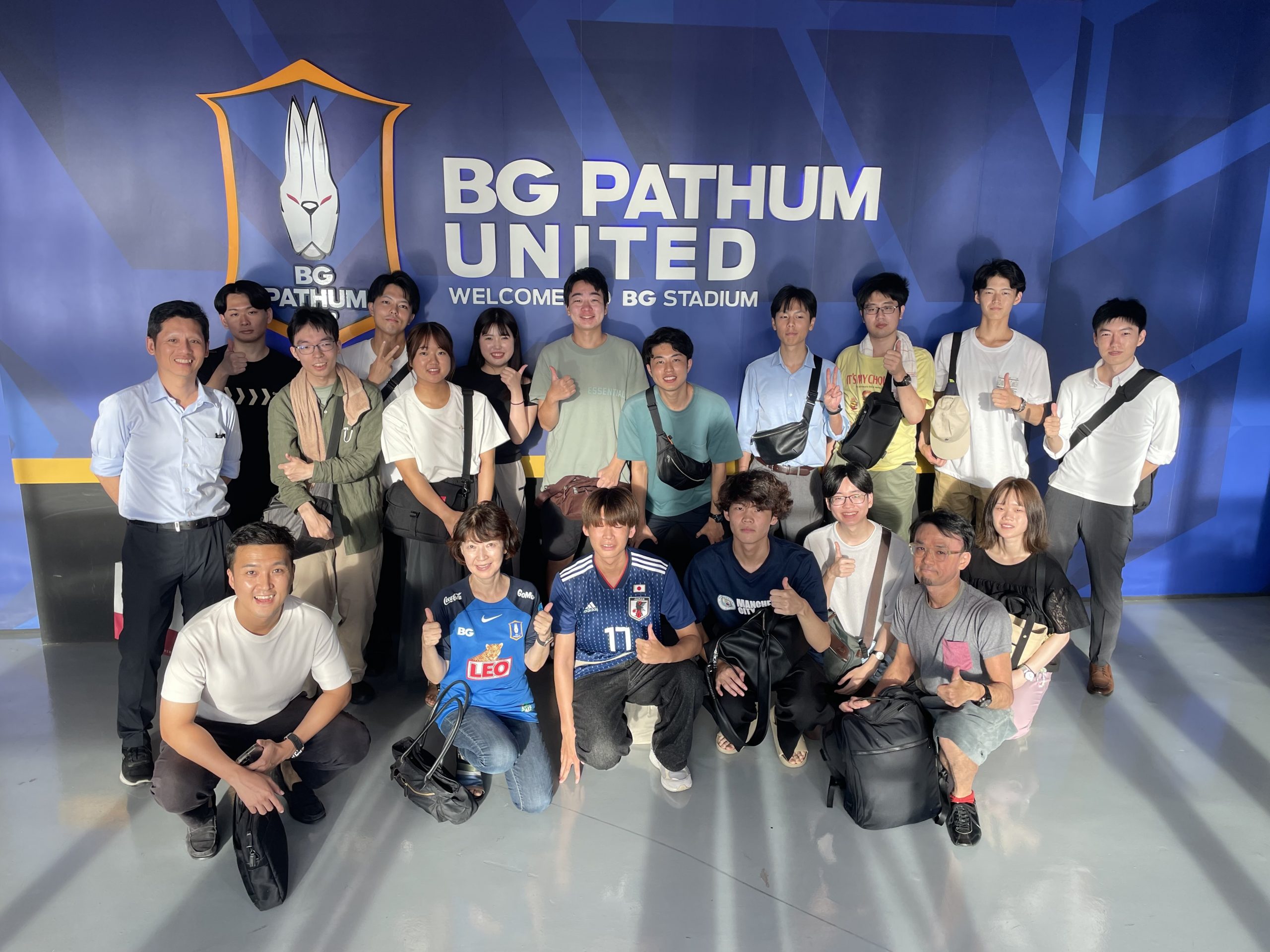
Observing the front lines of Thailand’s sports business at a professional soccer team’s home stadium
Could you tell us about the 2024 training program?
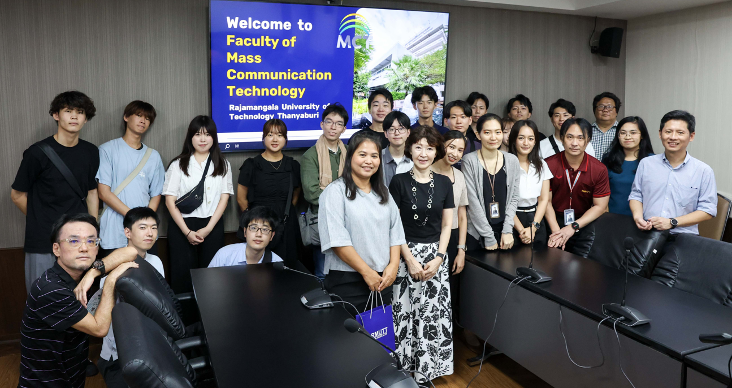
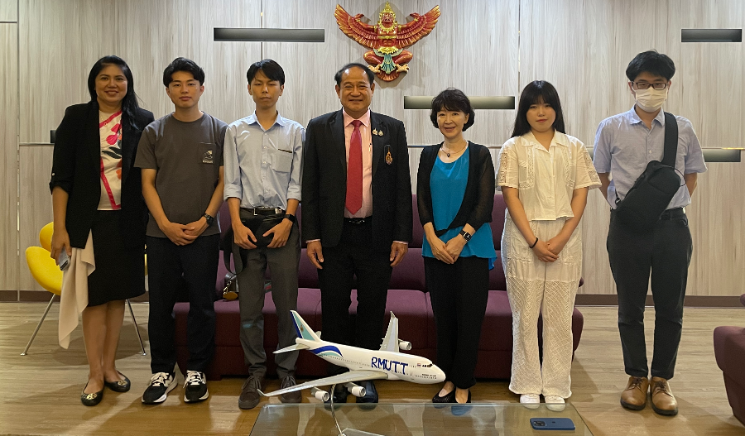
Nakane: From August 14 to 23, 2024, I joined a group of 14 students studying information engineering on a ten-day stay in Thailand. For the first six nights, we stayed at Rajabongkot Hotel on the campus of Rajamangala University of Technology Thanyaburi (RMUTT), one of Meijo University’s partner institutions in Pathum Thani Province.
During our stay, we participated in facility tours, student exchange activities, traditional Thai dance workshops, Thai cooking classes, and English-language lectures. In the latter half of the program, we visited the factories of two Japanese companies in Chonburi Province — TTFTS and DENSO — and also toured an AI platform development site at King Mongkut’s Institute of Technology, Ladkrabang (KMITL) in Bangkok.
Kumagai: I participated in the program in order to carry out the research project for which I had been selected as a JSPS Research Fellow, to acquire the skills necessary to become a “global engineer,” and to gain experience in outreach activities. I stayed in Thailand for 33 days, from July 22 to August 23, 2024.
For the first three weeks, I stayed at Rajamangala University of Technology Thanyaburi (RMUTT) with four students and Professor Mikiko Kawasumi, where we conducted research. During the final ten days, I joined the ten students participating in the Global ICT Engineer Training Program, and we spent the remainder of the program together.
How was your stay at Rajamangala University of Technology Thanyaburi (RMUTT) in Thailand?
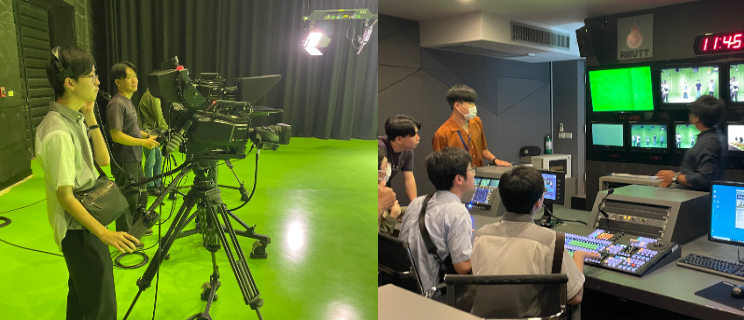
Nakane: We toured facilities in the faculties of Agriculture, Engineering, and Mass Communication Technology, and I felt that RMUTT places a strong emphasis on practical learning overall. For example, the Faculty of Mass Communication Technology had a large-scale, fully equipped filming and video-editing facility surrounded by green screens and roughly the size of two tennis courts, where students could develop practical skills through hands-on experience.
I was also surprised to meet a 19-year-old student at one of the exchange events who spoke Japanese with remarkable fluency. When I asked him how he had learned Japanese, he replied, “I’ve never formally studied it. I learned it from watching anime.” That experience made me realize that knowledge and skills are not acquired only through formal study, but can also be developed naturally through genuine interest and actually engaging in something yourself.
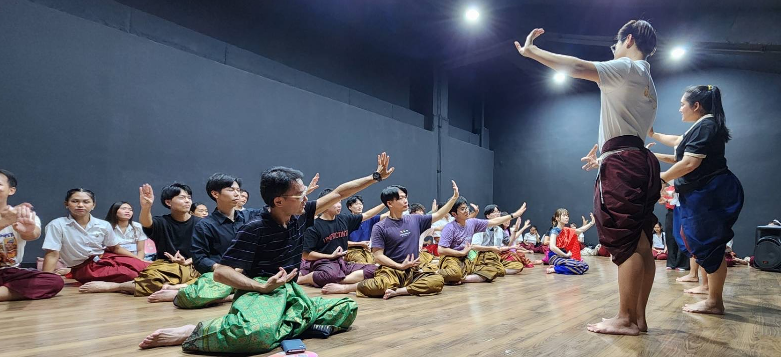
At the Faculty of Fine and Applied Arts, we joined local students in experiencing traditional Thai dance. We learned that in Thailand, dance movements can convey meanings similar to sign language. We practiced a dance expressing the phrase “I want to see you again,” and all fourteen of us performed it together in front of the Thai students. However, because our movements were rather awkward, the meaning did not come across at all, which was quite embarrassing for us (laughs).
Kumagai: The RMUTT campus was extremely large, and many students got around by motorcycle or car. There was also a free shuttle bus circulating throughout the campus, which we often used around lunchtime and at other times, so we never had any trouble getting around.
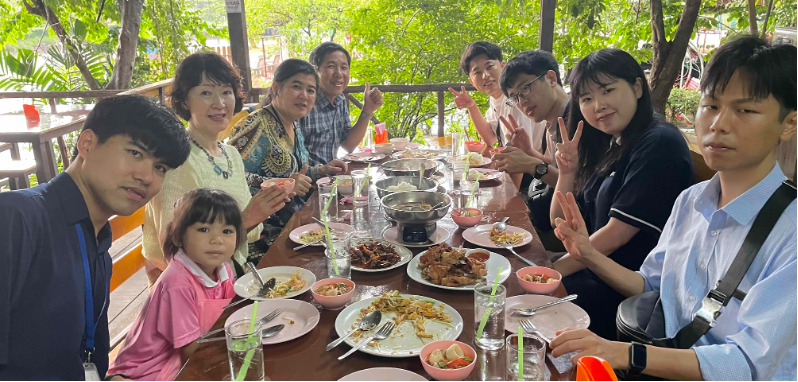
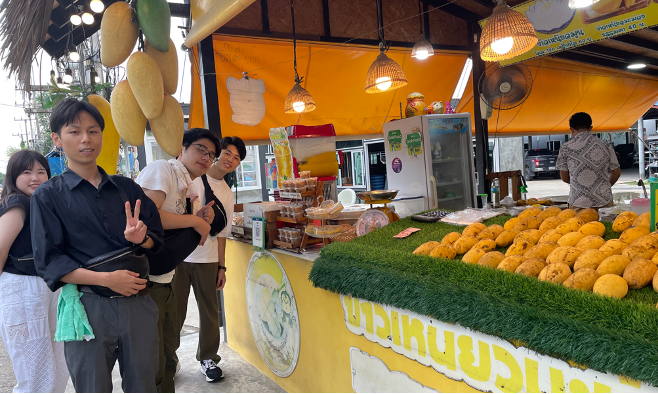
Breakfast was provided at the hotel, but for lunch we mainly bought food from the campus cafeteria, convenience stores, and small campus shops. We often used the small shops because they were inexpensive and located close to the laboratories. Since some items did not have price tags, however, we also had opportunities to communicate in Thai while shopping.
For dinner, we sometimes bought food at the on-campus night market, while at other times we went to shopping centers off campus. At the food courts in those commercial facilities, payments were made using rechargeable IC cards, which were something quite different from what we are accustomed to in Japan.
What impressed you most during your visits to Japanese companies and other universities?
Nakane: What impressed me most about the Japanese-affiliated company TTFTS was how strongly it focused on whether its business activities would benefit Thailand. Although its primary business involves machining and processing mechanical parts, during the major flooding in Ayutthaya in 2011, the company sold sandbags. In addition, when local suppliers were unavailable, it even manufactured polishing components itself.
Because the company consistently prioritized local needs, even though several Japanese employees had been seconded from the parent company, it did not strongly feel like a “Japanese company” in the conventional sense.
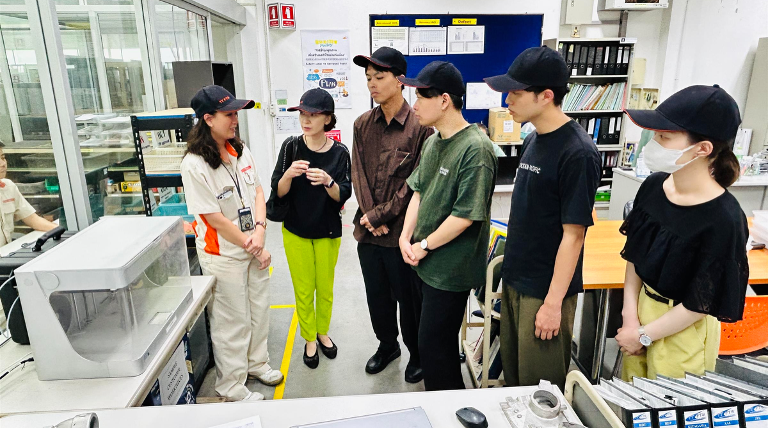
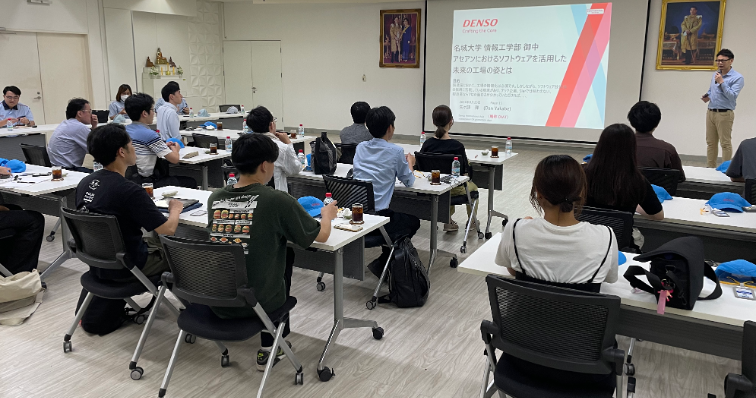
In contrast, at DENSO’s Bang Pakong plant, I had the impression that it was very much a Japanese company operating in Thailand by utilizing the local labor force. Because labor costs are relatively low, the company aims for semi-automation rather than full automation, which surprised me because it is not the kind of issue one commonly hears about in Japan.
Through these visits, I learned that the concerns and challenges businesses face can vary greatly depending on the region in which they operate.
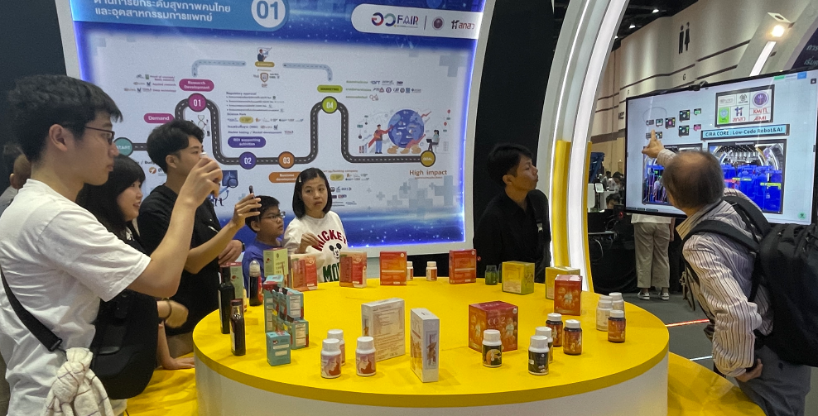
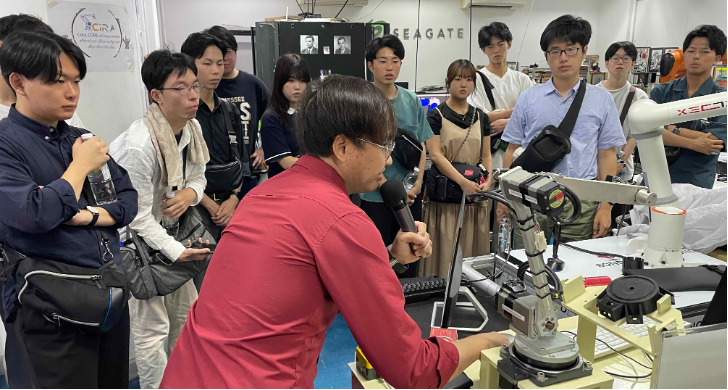
At King Mongkut’s Institute of Technology, Ladkrabang (KMITL), we were given a tour of the development site for CiRA Core, a Thai-developed low-code AI platform. We learned that one of the challenges in Thailand is a shortage of programmers, partly because programming education is conducted in English. CiRA Core was originally developed to address that issue, but it is now being applied across a wide range of fields, including healthcare and the automotive industry.
Hearing about the background behind its development made me realize that innovation truly emerges only when there is a strong awareness of a major problem that needs to be solved.
How was your three-week research experience in Thailand?
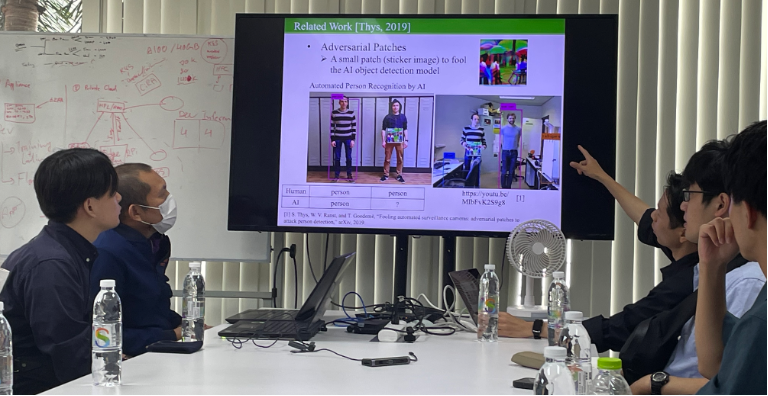
Kumagai: My research focused on evasion attacks using “adversarial patches” against Thai automobile license plate detection models. An adversarial patch is a type of attack designed to evade AI-based object detection. By attaching an image with a specially designed pattern (a patch) to an object that should normally be detected, the object detection model can be prevented from correctly recognizing it.
AI-based vehicle license plate detection systems are expected to be used in areas such as traffic safety and criminal investigations, making adversarial patches that can disable these systems a serious threat. Therefore, I conducted evaluation experiments to examine how adversarial patches are affected by changes in environmental colors.
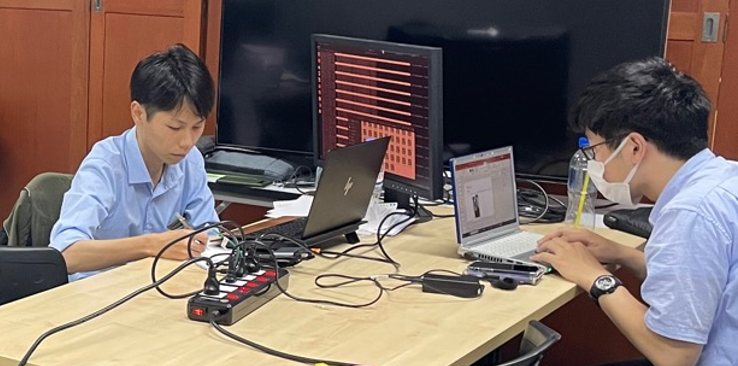
I had meetings about once a week with faculty members from RMUTT’s Color Research Center and the Faculty of Engineering, where I received a great deal of valuable advice. Based on their feedback, I determined the conditions for the intensity and hue of the color filters used in the experiments.
Using the insights gained from this research, I hope to explore methods for protecting systems against the threats posed by adversarial patches.
Finally, could you share your overall impressions of participating in this training program?
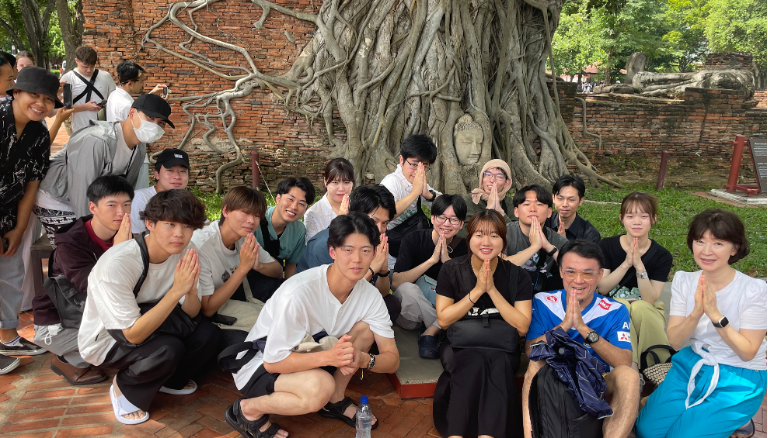
Nakane: It was my first time spending around ten days overseas, and I was able to gain a wide range of experiences both on the university campus and in Bangkok. On the weekend, we visited Ayutthaya, a World Heritage city, as well as Ko Kret, an island in the Chao Phraya River. During that trip, we even had the opportunity to receive a Buddhist sermon from a monk.
Through experiencing a completely different environment and communicating with people there, I became aware of many of my own challenges, such as being unable to respond quickly in English. At the same time, I also discovered new things about what I truly enjoy and value — things I had never realized before.
Kumagai: Compared with my time in Thailand five years ago, I noticed many changes and discoveries this time. QR code payment systems had become widespread not only in stores in central Bangkok, but even at market street stalls. I also saw “TAO BIN” vending machines developed by Thai companies installed everywhere, and there were many EVs manufactured by Chinese companies on the streets.
Through my own research on AI systems in Thailand, witnessing the spread of electronic payment systems, attending a science and technology event held in Bangkok, and seeing the Thai-developed AI platform “CiRA-Core” at King Mongkut’s Institute of Technology Ladkrabang (KMITL), I constantly found myself reflecting on how I should act as an engineering researcher from Japan and how I might contribute to the future of Japanese society and technological development.