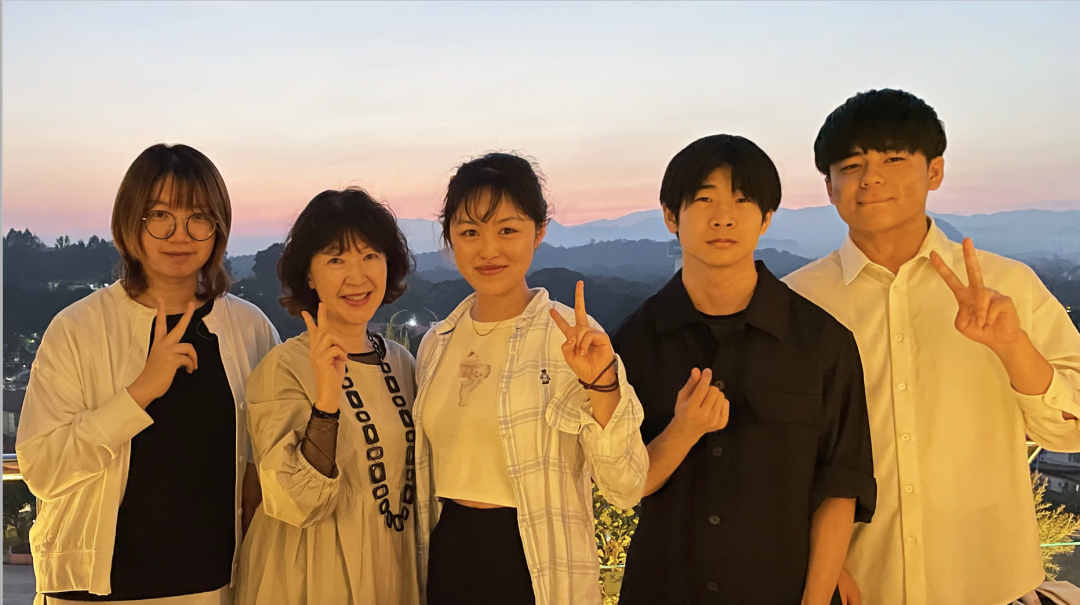
“Using AI to Reduce the Burden on Patients and Support Physicians in Diagnosis” — An Interview with Maiko Nagao

Graduated from Fujita Health University and entered Meijo University for graduate study, where she joined the laboratory of Professor Atsushi Teramoto. Drawing on her medical knowledge and the latest vision-language AI technologies, she is engaged in research on diagnostic imaging systems that support both patients and physicians.
We spoke with her about what motivated her to transition from a medical science background to graduate study at Meijo University, her research and student life in graduate school, and her future goals.

Maiko Nagao


Could you tell us about any achievements or research accomplishments from your undergraduate years that you are particularly proud of?

At the university I attended, most courses were mandatory, so weekdays were packed with classes, and before exams, there was always a huge amount to memorize. In addition, there were periods when we had laboratory sessions running from first period through fifth period several times a week, along with hospital training placements, so I was constantly occupied with reports and assignments.

Even in that environment, I believe one of the things I truly gained during my undergraduate years was the ability to face each task seriously and see it through to the end.
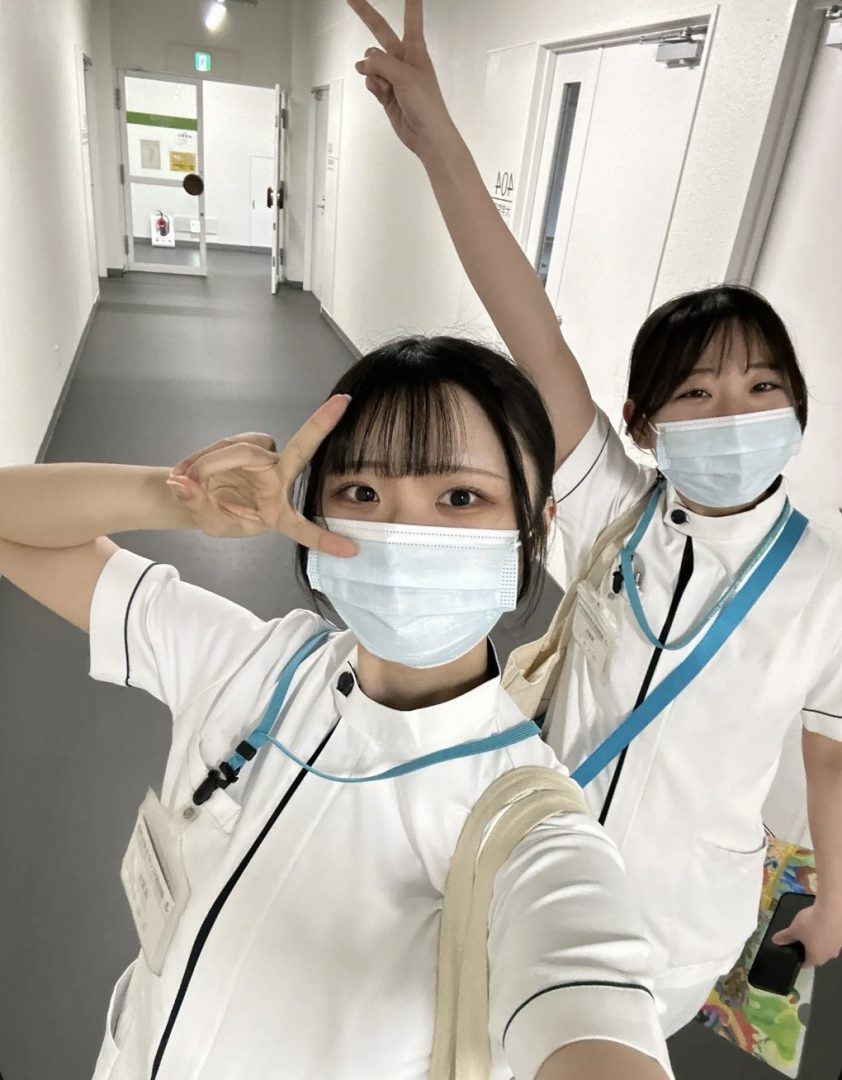
大学時代の長尾さん
During Ms. Nagao’s undergraduate years


Could you tell us why you decided to pursue a master’s degree and why you chose Meijo University for graduate school?

The reason I decided to pursue a master’s degree is that I wanted to explore the research I truly care about in greater depth. When I was in high school, a doctor once told my father that he might have lung cancer. However, because he was already suffering from another illness at the time, it was difficult for him to undergo invasive procedures such as a biopsy, which would have been necessary for a definitive diagnosis.

That experience led me to wonder whether there might be ways to support lung cancer diagnosis with less physical burden on patients. While looking into the topic, I learned that Professor Atsushi Teramoto’s laboratory was conducting research on AI-assisted cancer diagnosis, and I became strongly interested in being involved in such work myself.

Coming from a medical science background, I felt that Meijo University offered an environment where I could acquire knowledge and skills in information engineering while actively engaging in medical AI research. That is why I decided to pursue graduate studies there.


Could you explain the research theme you are currently working on?

I am currently developing lung cancer diagnostic support technology using vision-language AI models. Early detection and treatment are crucial for lung cancer, yet accurate diagnosis based solely on imaging data such as X-rays and CT scans remains a major challenge.

To address this issue, my research focuses on developing technology to automatically generate diagnostic reports from chest CT images and classify pulmonary nodule as benign or malignant. In addition, rather than simply generating text, I am developing an interactive system called Visual Question Answering (VQA) that can answer questions based on information contained in medical images.
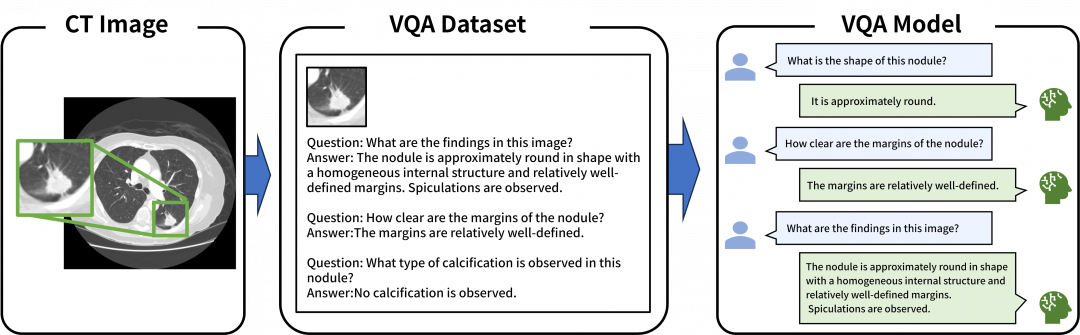
Interactive CT Image Diagnostic System (Visual Question Answering: VQA)


What do you find most interesting or rewarding about this research topic?

I think one of the most fascinating aspects of this research is its ability to explain, in words, the reasoning behind AI decisions that would otherwise remain a “black box.” For example, in a court case, if a verdict simply stated “guilty” without explaining the reasons or evidence behind the decision, no one would be convinced. What matters is which evidence led to that conclusion and why.

The same applies to medical AI. Even if an AI system classifies a tumor as “benign” or “malignant,” physicians cannot fully trust the result unless they understand the basis for the decision. My research aims to present, in a clearer way, which parts of an image the AI focused on and which features it used as the basis for its judgment.

What I find especially compelling about this research is the opportunity to examine how AI “looks at” medical images and how it interprets and understands them.


On the other hand, could you tell us about any difficulties you have faced or any memorable failures along the way?

One of the biggest challenges for me has been that I come from a medical-science background rather than an information-engineering one, so it takes time to understand technical topics such as programming and AI. When I first started my research, I often could not immediately follow senior students’ presentations or fully understand what professors were discussing, which made me keenly aware of my lack of knowledge.

Still, whenever I encounter something I do not understand, I first try to research it on my own. If I still have difficulty understanding it, I ask professors, senior students, or classmates for help and work through it step by step. Even now, there are many things I find challenging, but I also feel that I am gradually deepening my understanding and growing in the field.


Could you tell us about any achievements or awards you have received during your first year after enrolling?

During my first year in the program, two of my first-author papers were published in international peer-reviewed journals, with me as the first author. In addition, I presented my research at two international conferences and six domestic conferences, continuously sharing the results of my work.

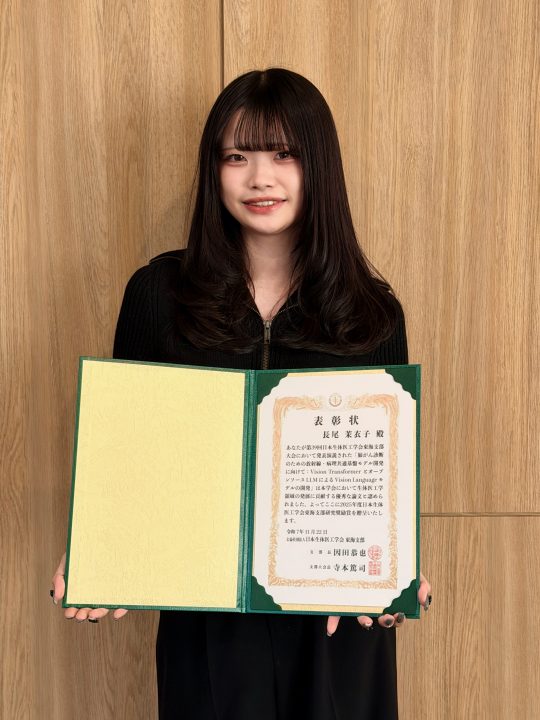
Among these achievements, receiving the Research Encouragement Award at the Tokai Branch Meeting of the Japanese Society for Medical and Biological Engineering was especially encouraging for me. Looking back, I feel it was a year in which I was able to produce tangible outcomes through my research in many different ways.
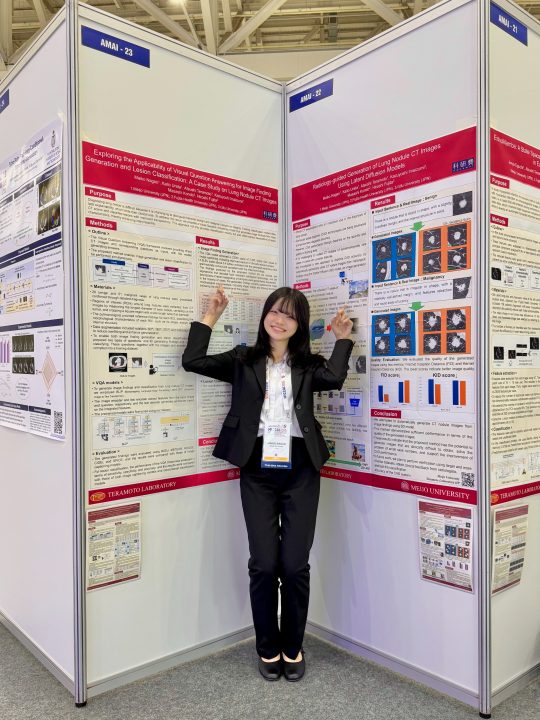
Poster Presentation at an International Conference

Research Encouragement Award at the Tokai Branch Meeting of the Japanese Society for Medical and Biological Engineering


I heard that you also worked on writing papers in English. How was that experience? And what would you like to take on next?

As for writing papers in English, I was not particularly uncomfortable with writing itself to begin with, so I did not struggle too much in that regard. On the other hand, when it came to the technical aspects of information engineering and AI, I still needed to deepen my understanding as I wrote, which I found quite challenging. At the same time, going through the peer-review process allowed me to notice points I had overlooked and to reexamine my research from new perspectives. I feel it gave me a valuable opportunity to look at my work more objectively and from a broader perspective.

The next thing I would like to focus on is improving my ability to communicate my research findings more clearly and accurately in English. Through writing papers and giving conference presentations, I hope to become better at conveying both the significance and the appeal of my research.
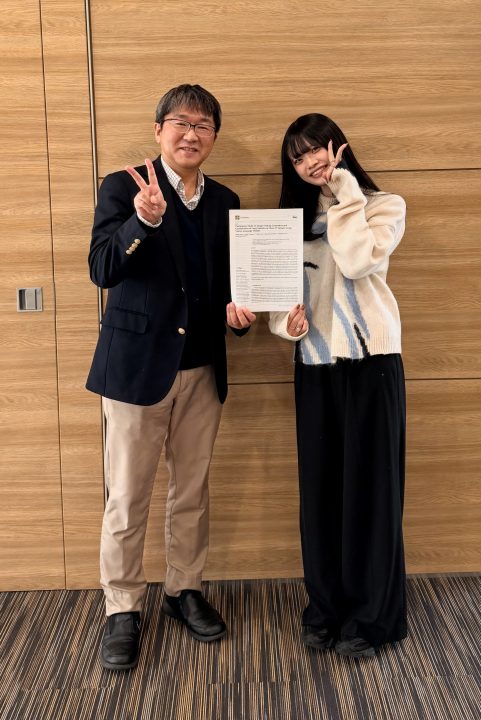
Together with her academic advisor, Professor Atsushi Teramoto (left), holding the journal in which her paper was published.


Aside from your research, are there any other things you are focusing on or skills you would like to develop during your time as a student?

At the moment, I spend most of my time on research, so I would not say I have much time to devote to other things. However, the skills I especially want to strengthen while I am still a student are my knowledge of information engineering and my programming abilities.

Since information engineering was not originally my field of specialization, I would like to continue improving both my technical understanding and my implementation skills.


Looking back on your undergraduate years, is there anything you are glad you did, or anything you wish you had done differently?

One thing I wish I had done more of during my undergraduate years is studying English. When I gave a presentation at an international conference, I found it difficult to convey exactly what I wanted to say, which made me realize I should have improved my English skills earlier.

In research, it is important not only to read academic papers but also to communicate your own ideas in English through presentations and Q&A discussions. For that reason, I believe that gradually building English proficiency during undergraduate study can be extremely valuable for future research activities.


Could you tell us about your typical daily or weekly routine? Also, how do you usually spend your days off?

I am not much of a morning person, so I often go to the laboratory around midday and stay there until late at night. Even after returning home or on weekends, I usually spend much of my time doing research. However, when I am not busy with conferences or paper deadlines, I enjoy spending time with friends or going on trips. I have also played the piano since I was very young, so I still occasionally play it to relax and unwind.


Where do you think you will be, and what do you think you will be doing, ten years from now?

I cannot yet clearly picture where I will be in ten years, but the research I am currently working on is personally very meaningful to me because of my own experiences and background. For that reason, even if my specific research themes change over time, I hope to remain involved in the field of medical AI, whether as a researcher at a university or in industry.


Could you tell us about your goals or dreams in life?

Rather than accomplishing something extraordinarily grand, my goal in life is to live in a way that allows the work I do and the efforts I continue to make to become a source of support for others, even in a small way. I believe that significant achievements are built upon the accumulation of small, everyday efforts, so I want to continue doing what I can sincerely and steadily, one step at a time. Through those efforts, I hope to become someone who can positively influence the people around me and bring light to even a small corner of the world.

I also want the knowledge and experiences I have gained to become something that can benefit others, rather than keeping them only for myself. In research as well, I do not believe the purpose is simply to deepen knowledge or advance technology itself; what truly matters is whether it ultimately helps medical professionals and patients.

I hope that the research I am currently pursuing will contribute, even in a small way, to supporting physicians in diagnosis and treatment and to helping both patients and the medical field.


Looking back, what makes you feel that enrolling in the graduate school at Meijo University was the right decision? Would you recommend it to future students?

What made me feel glad that I entered the graduate school at Meijo University was that it provided an environment where even someone like me, coming from a different academic background, could learn with confidence while engaging in research. I came to Meijo University from another university, and information engineering was outside my original field of study. However, the professors and senior students provided very careful guidance, allowing me to deepen my understanding step by step as I progressed with my research.

I was also fortunate to be surrounded by supportive friends, and there was an atmosphere where I could easily ask questions whenever I did not understand something. Because of that, even though I initially felt anxious about entering a completely new field, I was able to continue my research with a positive mindset.

For these reasons, I would recommend the graduate school at Meijo University to people who want to challenge themselves in a new field beyond their original specialization, or to those who want to pursue research more deeply. Even if you feel uncertain because your background is in a different field, there are professors, senior students, and peers who will support you, making it an environment where you can learn and grow with confidence.
“Becoming Global Engineers Through Cross-Cultural and Academic Exchange in Thailand” — An Interview with Shinya Nakane and Ryo Kumagai

The Department of Information Engineering conducts an overseas training program during the summer vacation in order to develop “global engineers” who can play active roles in the international community. Since 2015, the department has sent around ten students, selected from across different academic years, and the total number of participants now exceed 100. The program is structured around valuable activities that cannot be experienced on an ordinary overseas trip, and many students have said that the training program changed their values. This time, we spoke with two graduate students dispatched in fiscal year 2024, Shinya Nakane and Ryo Kumagai, about their experiences.

Observing the front lines of Thailand’s sports business at a professional soccer team’s home stadium


Could you tell us about the 2024 training program?

Nakane: From August 14 to 23, 2024, I joined a group of 14 students studying information engineering on a ten-day stay in Thailand. For the first six nights, we stayed at Rajabongkot Hotel on the campus of Rajamangala University of Technology Thanyaburi (RMUTT), one of Meijo University’s partner institutions in Pathum Thani Province.

During our stay, we participated in facility tours, student exchange activities, traditional Thai dance workshops, Thai cooking classes, and English-language lectures. In the latter half of the program, we visited the factories of two Japanese companies in Chonburi Province — TTFTS and DENSO — and also toured an AI platform development site at King Mongkut’s Institute of Technology, Ladkrabang (KMITL) in Bangkok.

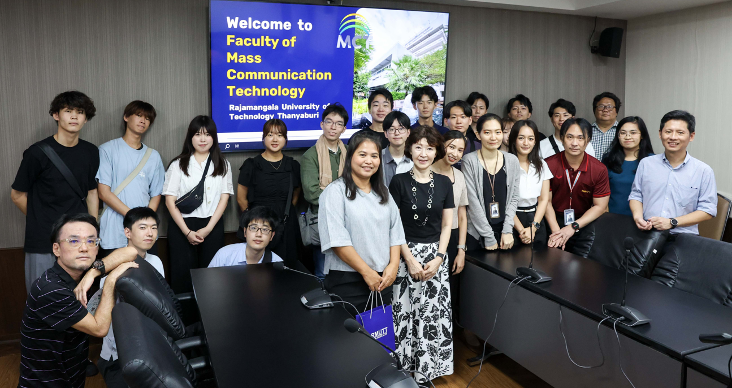
Greeting faculty members of the Faculty of Mass Communication Technology, which hosted the program
Greeting faculty members of the Faculty of Mass Communication Technology, which hosted the program.

Kumagai: I participated in the program in order to carry out the research project for which I had been selected as a JSPS Research Fellow, to acquire the skills necessary to become a “global engineer,” and to gain experience in outreach activities. I stayed in Thailand for 33 days, from July 22 to August 23, 2024.

For the first three weeks, I stayed at Rajamangala University of Technology Thanyaburi (RMUTT) with four students and Professor Mikiko Kawasumi, where we conducted research. During the final ten days, I joined the ten students participating in the Global ICT Engineer Training Program, and we spent the remainder of the program together.

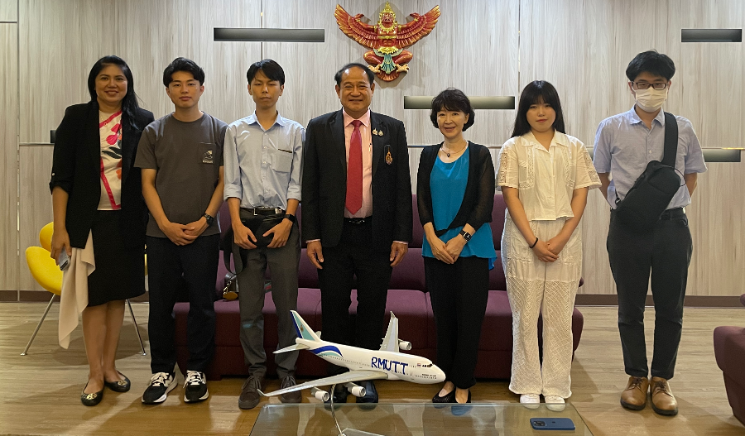
Meeting with the president of Rajamangala University of Technology Thanyaburi (Ryo Kumagai, third from left)
Meeting with the president of Rajamangala University of Technology Thanyaburi (Ryo Kumagai, third from left).


How was your stay at Rajamangala University of Technology Thanyaburi (RMUTT) in Thailand?

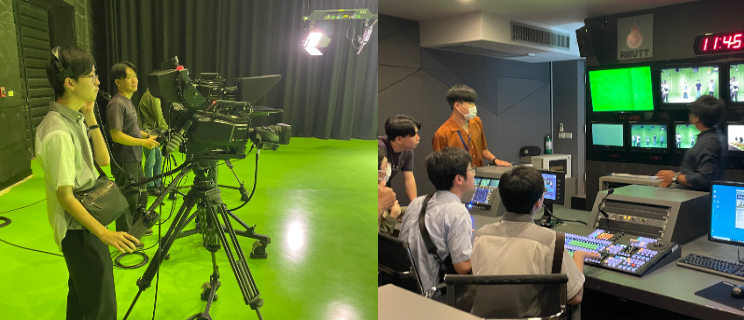
Nakane: We toured facilities in the faculties of Agriculture, Engineering, and Mass Communication Technology, and I felt that RMUTT places a strong emphasis on practical learning overall. For example, the Faculty of Mass Communication Technology had a large-scale, fully equipped filming and video-editing facility surrounded by green screens and roughly the size of two tennis courts, where students could develop practical skills through hands-on experience.

I was also surprised to meet a 19-year-old student at one of the exchange events who spoke Japanese with remarkable fluency. When I asked him how he had learned Japanese, he replied, “I’ve never formally studied it. I learned it from watching anime.” That experience made me realize that knowledge and skills are not acquired only through formal study, but can also be developed naturally through genuine interest and actually engaging in something yourself.

Experiencing studio filming, chroma key compositing, and video editing (Shinya Nakane, second from left)

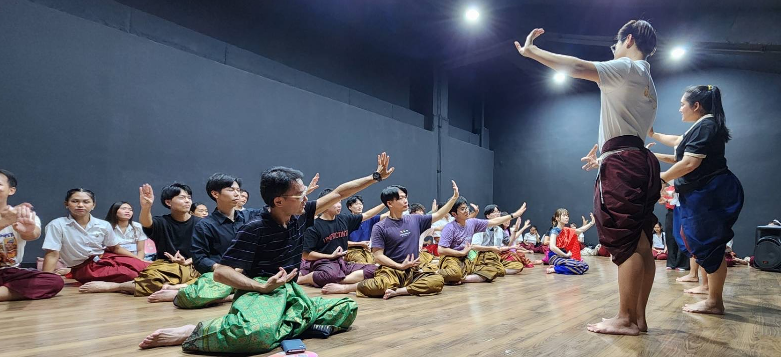
At the Faculty of Fine and Applied Arts, we joined local students in experiencing traditional Thai dance. We learned that in Thailand, dance movements can convey meanings similar to sign language. We practiced a dance expressing the phrase “I want to see you again,” and all fourteen of us performed it together in front of the Thai students. However, because our movements were rather awkward, the meaning did not come across at all, which was quite embarrassing for us (laughs).

Ryo Kumagai and Shinya Nakane practicing hand movements for the dance
Ryo Kumagai and Shinya Nakane practicing hand movements for the dance.

Kumagai: The RMUTT campus was extremely large, and many students got around by motorcycle or car. There was also a free shuttle bus circulating throughout the campus, which we often used around lunchtime and at other times, so we never had any trouble getting around.

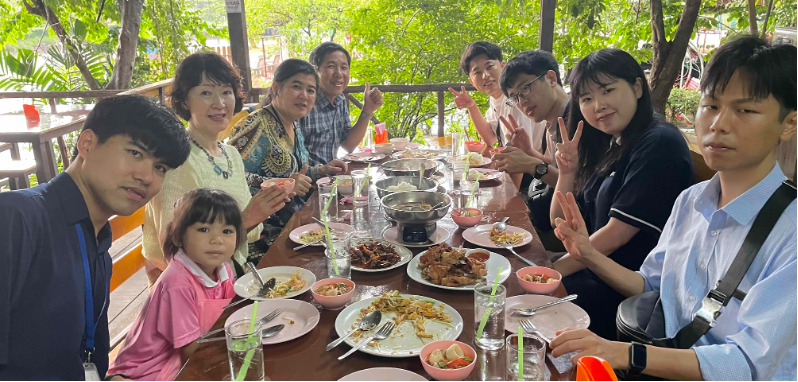
Welcome party at an open-air restaurant on our first day in Thailand
Welcome party at an open-air restaurant on our first day in Thailand.

Breakfast was provided at the hotel, but for lunch we mainly bought food from the campus cafeteria, convenience stores, and small campus shops. We often used the small shops because they were inexpensive and located close to the laboratories. Since some items did not have price tags, however, we also had opportunities to communicate in Thai while shopping.

For dinner, we sometimes bought food at the on-campus night market, while at other times we went to shopping centers off campus. At the food courts in those commercial facilities, payments were made using rechargeable IC cards, which were something quite different from what we are accustomed to in Japan.

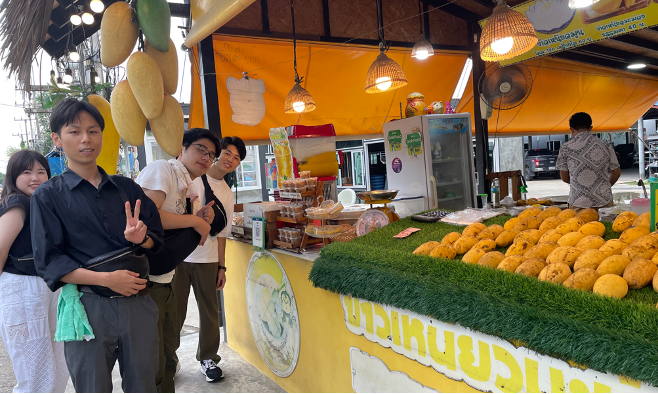
Ryo Kumagai buying khao niao mamuang (mango sticky rice) at a mango shop near the university
Ryo Kumagai buying khao niao mamuang (mango sticky rice) at a mango shop near the university.


What impressed you most during your visits to Japanese companies and other universities?

Nakane: What impressed me most about the Japanese-affiliated company TTFTS was how strongly it focused on whether its business activities would benefit Thailand. Although its primary business involves machining and processing mechanical parts, during the major flooding in Ayutthaya in 2011, the company sold sandbags. In addition, when local suppliers were unavailable, it even manufactured polishing components itself.

Because the company consistently prioritized local needs, even though several Japanese employees had been seconded from the parent company, it did not strongly feel like a “Japanese company” in the conventional sense.

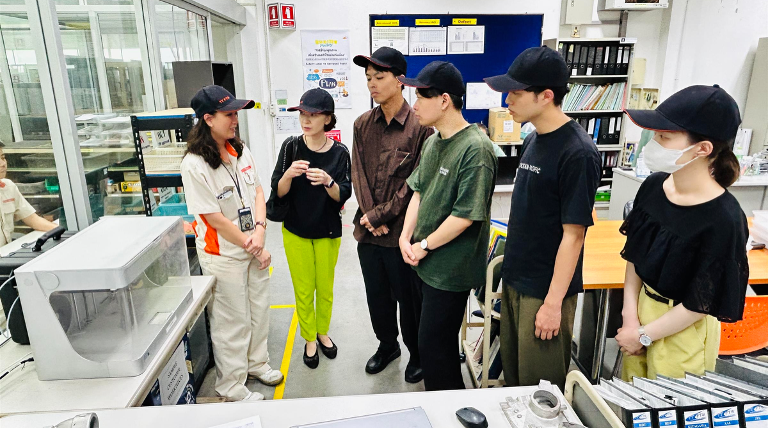
A Thai employee giving us a tour of the factory
A Thai employee giving us a tour of the factory.

In contrast, at DENSO’s Bang Pakong plant, I had the impression that it was very much a Japanese company operating in Thailand by utilizing the local labor force. Because labor costs are relatively low, the company aims for semi-automation rather than full automation, which surprised me because it is not the kind of issue one commonly hears about in Japan.

Through these visits, I learned that the concerns and challenges businesses face can vary greatly depending on the region in which they operate.

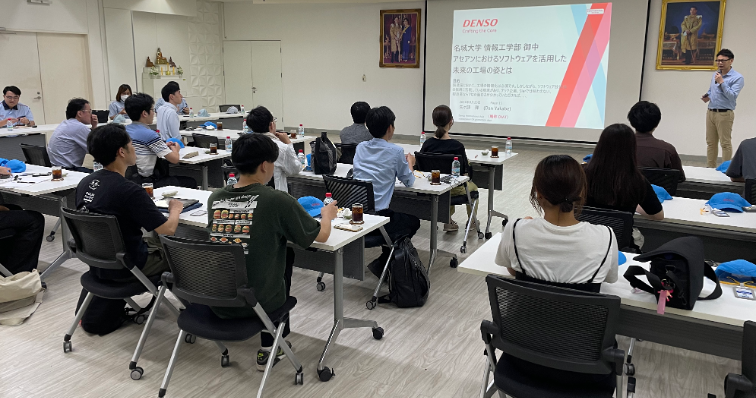
Learning about globalization in the mobility industry and the IT landscape in ASEAN countries
Learning about globalization in the mobility industry and the IT landscape in ASEAN countries.

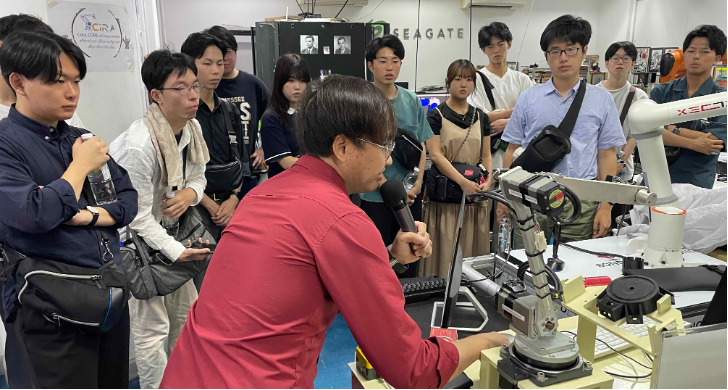
At King Mongkut’s Institute of Technology, Ladkrabang (KMITL), we were given a tour of the development site for CiRA Core, a Thai-developed low-code AI platform. We learned that one of the challenges in Thailand is a shortage of programmers, partly because programming education is conducted in English. CiRA Core was originally developed to address that issue, but it is now being applied across a wide range of fields, including healthcare and the automotive industry.

Hearing about the background behind its development made me realize that innovation truly emerges only when there is a strong awareness of a major problem that needs to be solved.

Visiting a startup launched from a university research project
Visiting a startup launched from a university research project.


How was your three-week research experience in Thailand?

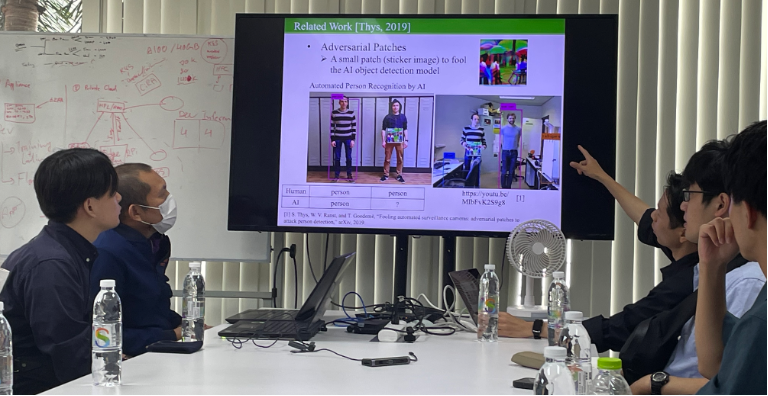
Kumagai: My research focused on evasion attacks using “adversarial patches” against Thai automobile license plate detection models. An adversarial patch is a type of attack designed to evade AI-based object detection. By attaching an image with a specially designed pattern (a patch) to an object that should normally be detected, the object detection model can be prevented from correctly recognizing it.

AI-based vehicle license plate detection systems are expected to be used in areas such as traffic safety and criminal investigations, making adversarial patches that can disable these systems a serious threat. Therefore, I conducted evaluation experiments to examine how adversarial patches are affected by changes in environmental colors.

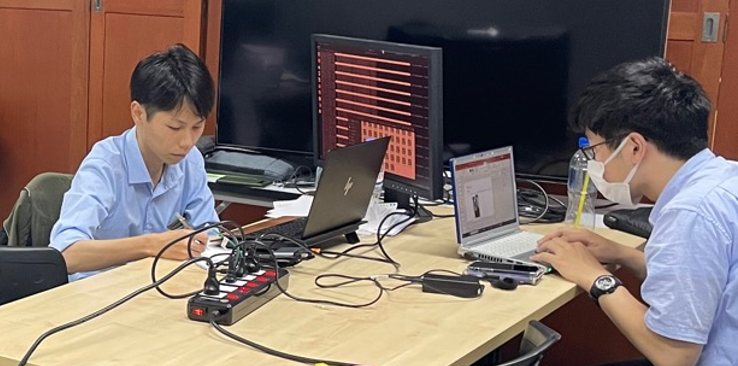
Ryo Kumagai conducting research daily in a laboratory at Rajamangala University of Technology Thanyaburi
Ryo Kumagai conducting research daily in a laboratory at Rajamangala University of Technology Thanyaburi.

I had meetings about once a week with faculty members from RMUTT’s Color Research Center and the Faculty of Engineering, where I received a great deal of valuable advice. Based on their feedback, I determined the conditions for the intensity and hue of the color filters used in the experiments.

Using the insights gained from this research, I hope to explore methods for protecting systems against the threats posed by adversarial patches.

Presenting research findings at KMITL
Presenting research findings at KMITL.


Finally, could you share your overall impressions of participating in this training program?

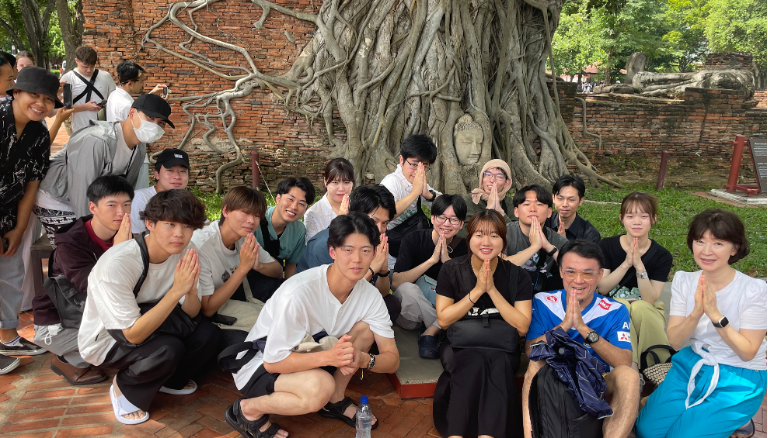
Nakane: It was my first time spending around ten days overseas, and I was able to gain a wide range of experiences both on the university campus and in Bangkok. On the weekend, we visited Ayutthaya, a World Heritage city, as well as Ko Kret, an island in the Chao Phraya River. During that trip, we even had the opportunity to receive a Buddhist sermon from a monk.

Through experiencing a completely different environment and communicating with people there, I became aware of many of my own challenges, such as being unable to respond quickly in English. At the same time, I also discovered new things about what I truly enjoy and value — things I had never realized before.

Spending the weekend in the World Heritage city of Ayutthaya
Spending the weekend in the World Heritage city of Ayutthaya.

Kumagai: Compared with my time in Thailand five years ago, I noticed many changes and discoveries this time. QR code payment systems had become widespread not only in stores in central Bangkok, but even at market street stalls. I also saw “TAO BIN” vending machines developed by Thai companies installed everywhere, and there were many EVs manufactured by Chinese companies on the streets.

Through my own research on AI systems in Thailand, witnessing the spread of electronic payment systems, attending a science and technology event held in Bangkok, and seeing the Thai-developed AI platform “CiRA-Core” at King Mongkut’s Institute of Technology Ladkrabang (KMITL), I constantly found myself reflecting on how I should act as an engineering researcher from Japan and how I might contribute to the future of Japanese society and technological development.

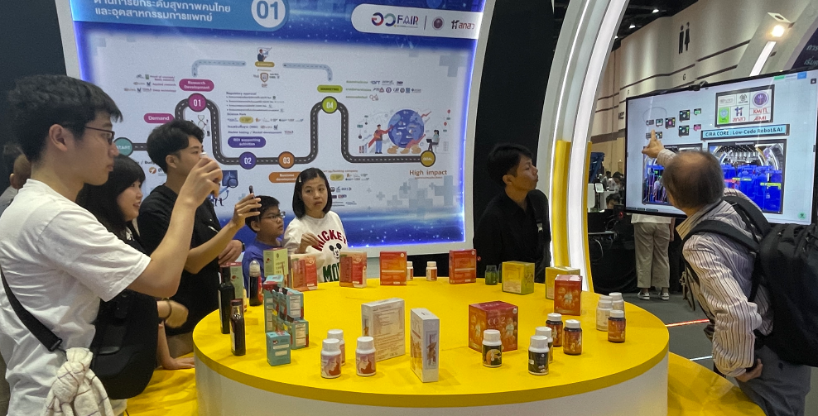
Visiting the science and technology exhibition SCI-POWER for Future Thailand in Bangkok
Visiting the science and technology exhibition “SCI-POWER for Future Thailand” in Bangkok.

“I learned about Japan through anime—and now I want to expand my potential here.” Interview with Yizhu Zhou

Yizhu Zhou is an international student from Harbin, Heilongjiang Province in northern China.
As an undergraduate, she majored in Information Management and Information Systems at Hangzhou Dianzi University in southern China. We asked her about her research and daily life as a graduate student at Meijo University.

Zhou presenting at a conference


You’ve had an interest in Japan for quite some time—What first sparked your curiosity?

I’ve been watching Japanese anime since I was a kid. My favorite was NARUTO. That made me interested in Japanese swordsmanship, and I joined the kendo club at university, where I trained for three years. Since manga and anime are available in China almost at the same time as in Japan, I often talked about them with other members of the club.


Wasn’t it tough to wear all that protective gear? Is kendo popular in China?

I actually thought the armor looked really cool. Kendo is quite popular in China. The kendo club at Alibaba is known to be really strong.


Why did you choose Aichi Prefecture (Nagoya)?

I have an uncle who did his graduate studies in medical sciences in Nagoya and now runs his own business there, so that influenced my decision.


What made you choose Professor Kawasumi’s lab at Meijo University?

My uncle recommended Meijo University to me. While browsing the university website, I came across Professor Kawasumi’s lab. One thing that stood out to me was that Professor Kawasumi is a woman working in the field of computer science—that really caught my attention! (laughs)


What’s your impression of Meijo University?

The students are very stylish and seem very active in their club activities.


What kind of research are you working on?

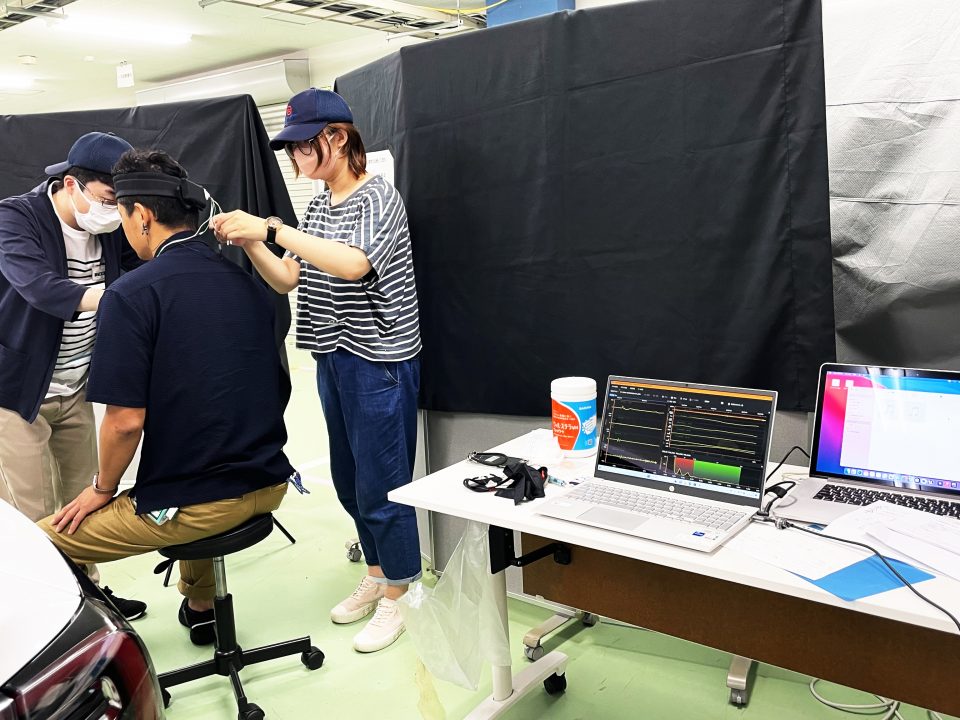
My research focuses on analyzing human emotions using physiological measurements in interior lighting environments for next-generation mobility systems.


Why did you choose that research topic?

Among the various research projects conducted in Professor Kawasumi’s lab, this one caught my interest. As autonomous driving technology continues to advance, I believe that improving the in-vehicle environment will become increasingly important.
Nagoya is also a major hub for the automotive industry, and since I hope to find a job in Japan, this project—being a collaborative study with companies—seemed especially useful for my future. Professor Kawasumi also encouraged me to pursue it.


Zhou conducting a physiological measurement experiment (far right)


What do you find most interesting about your research?

I didn’t have the chance to work on this kind of research during my undergraduate studies, so I find it fascinating to measure physiological data—like heart rate and brain waves—using specialized devices. It’s also my first time participating in a collaborative project with a company or conducting experiments in a corporate setting, so I’m learning a lot from the experience.


What do you find challenging about graduate school?

It was my first time taking classes and joining lab meetings in Japan, so getting used to everything was tough. Even now, I sometimes struggle to fully grasp my role and the intentions behind what’s expected of me.


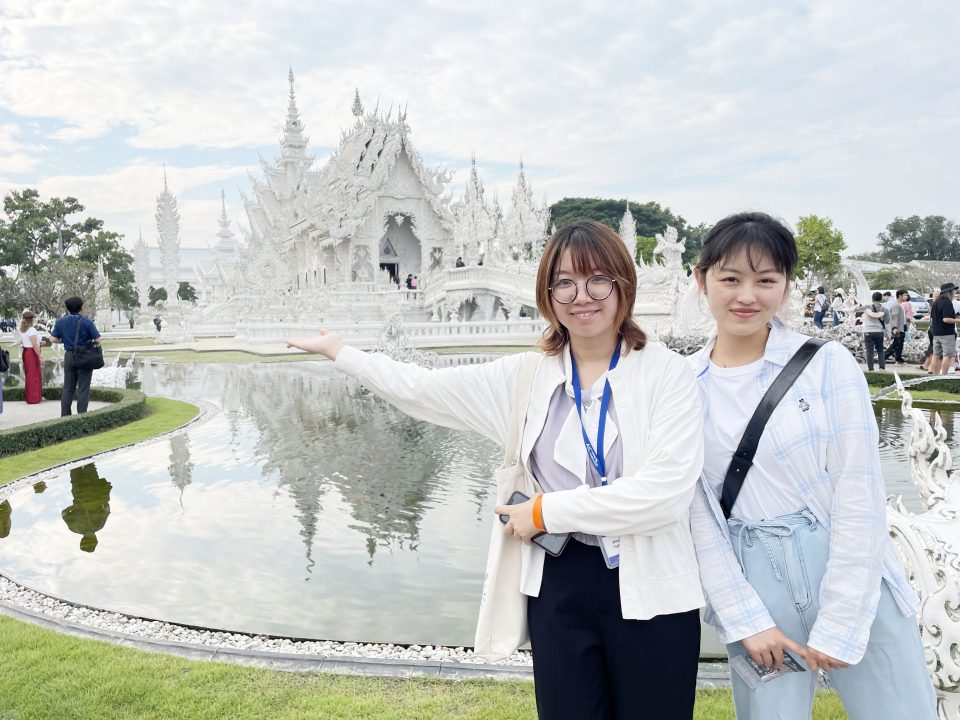
On an excursion during the international conference, with Hang Jin (left), a fellow member of the Kawasumi Laboratory.


Professor Kawasumi mentioned that you’re a deep and logical thinker, which makes you well-suited for research. What skills would you like to develop before completing your degree?

I attended an international conference in Thailand as a co-author and helped with the poster session. In the future, I hope to give presentations at international conferences myself, so I want to become a better presenter.


You’ve also worked as a teaching assistant (TA), giving research presentations to undergraduate students and helping with Java programming exercises, right?

Yes, I’ve given slide presentations at academic conferences twice so far, but I still get very nervous speaking in front of people.


You visited Kochi during the long vacation. What made you want to go there?

I became a fan of Ryoma Sakamoto because of a video game! (laughs) I went with a Chinese friend who also likes Sakamoto. We had seared bonito (katsuo no tataki) and it was delicious. I’m also a fan of Golden Kamuy, so I’d love to visit Hokkaido someday too.


Besides seared bonito (katsuo no tataki), I hear your favorite food is takoyaki.

I even tried making takoyaki myself at a lab party!


Zhou trying her hand at making takoyaki


Do you have any advice for students who are planning to study at Meijo University?

Taxis and fruit can be quite expensive here, but overall, I’m living comfortably. My hometown, Harbin, is extremely cold, but Nagoya is much warmer. When I was in Hangzhou for university, there were mosquitoes all year round, which I didn’t like. Here in Nagoya, they disappear in winter, so it’s not as bad. Also, I find it very convenient that you can take the Shinkansen or trains without going through baggage checks or ID verification. And convenience stores offer so many services—you can even buy event tickets there!


What are your dreams for the future?

I hope to get a job at a company in Aichi Prefecture and work hard. I don’t think Tokyo would suit me… But maybe 20 years from now, I’d like to return to China and repay my parents for everything they’ve done for me.


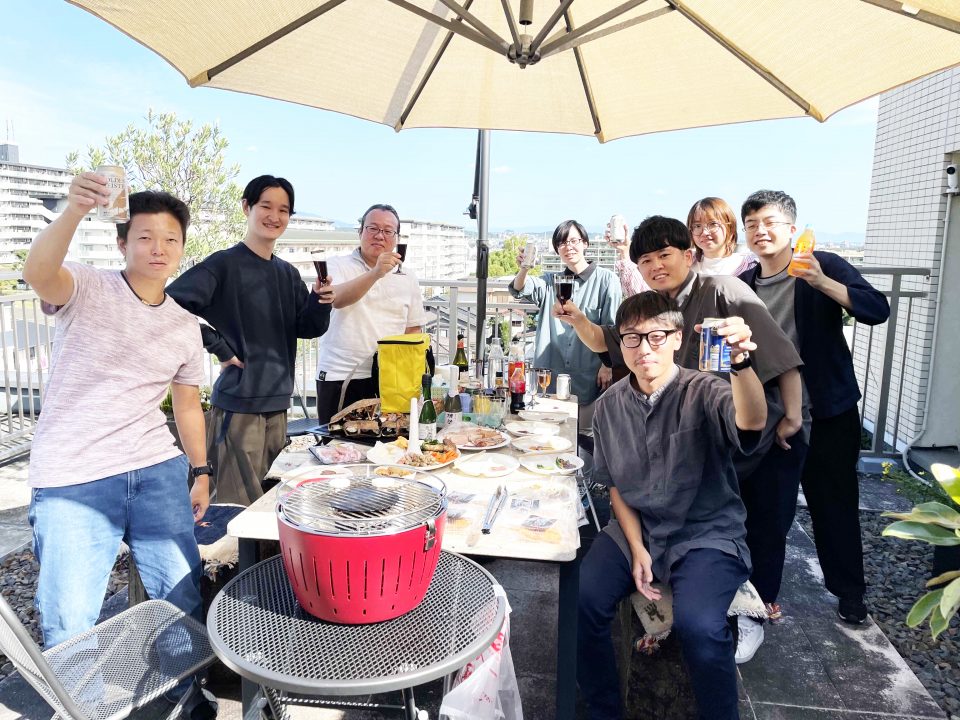
Having a home party with lab alumni

[Interview Date] June 24, 2024

“Analyzing the Emotional Perception Structures of Japanese and Chinese People” — An Interview with Hang Ji

Hang Jin is an international student from Tieling, located in Liaoning Province in northern China. She majored in Computer Science and Technology at Dalian University of Foreign Languages, a university near her hometown. We asked her about her research and daily life as a graduate student at Meijo University.

Jin presenting her research during a poster session at an international conference


I heard you’ve been interested in Japan for a long time. What sparked that interest?

I’ve been watching Japanese anime since I was a child. My favorite was Detective Conan.


So that’s why you also enjoy mystery novels like those by Conan Doyle and Agatha Christie. I heard your talents include playing the koto and dancing?

I’ve been playing the koto since I was very young. But it’s not the tightly strung Japanese koto—it’s the Chinese version, known as the zheng. As for dancing, I practiced traditional dance. In high school, I performed at our school’s cultural festival wearing a red costume.


Why did you choose Aichi Prefecture (Nagoya) as your study abroad destination?

I had already been studying Japanese at my university in China, and I had visited Japan twice—once to Tokyo and once to Osaka. By the time I came to Japan, COVID-related restrictions had eased, but Tokyo still felt extremely crowded, so I thought Nagoya would be a better choice. Following my mother’s advice (she teaches English) I spent six months as a research student at Nagoya Institute of Technology while exploring further opportunities.


Why did you choose Professor Kawasumi’s lab at Meijo University?

While browsing university websites, I learned that Meijo University’s Graduate School of Science and Technology is home to a Nobel Prize–winning professor. That really caught my attention. I began looking for a lab that matched my research interests, and that’s how I found the Kawasumi Laboratory. It also stood out to me that she is the only female professor in the field of computer science here.


What is your impression of Meijo University?

I’ve noticed that there are a lot of male students here! (laughs) Back in China, the gender ratio was more balanced—about fifty-fifty.

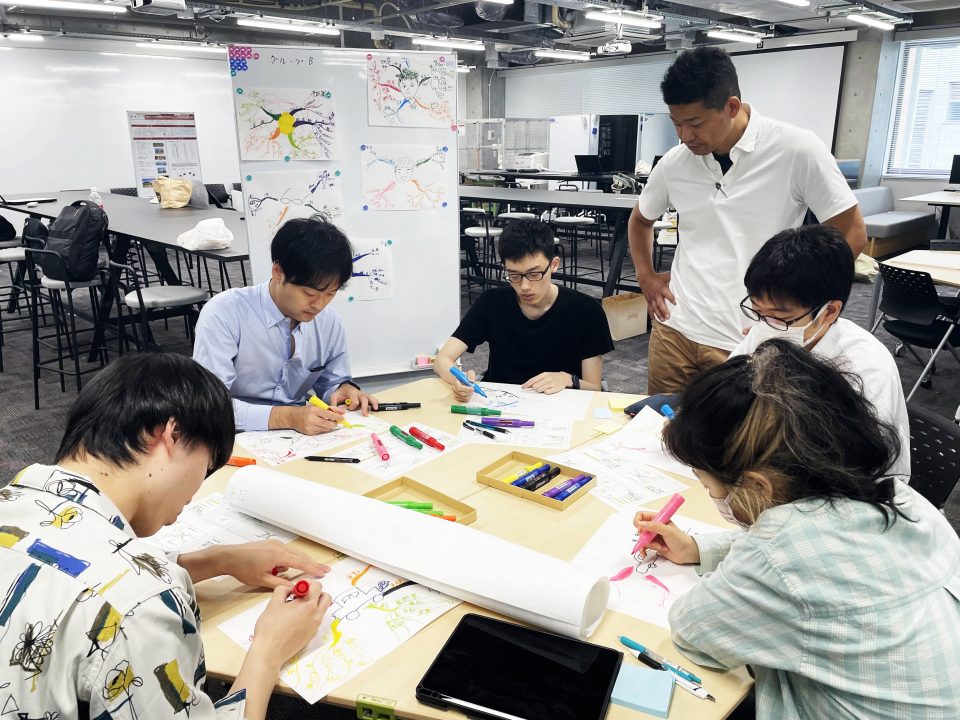
Ideathon held in collaboration with industry


What kind of research are you working on?

I’m conducting a quantitative analysis of how Japanese and Chinese people emotionally respond to seasonal landscapes.


Can you explain what that involves?

Professor Kawasumi had previously conducted a study analyzing color impressions in traditional townscapes of Aichi Prefecture—specifically in Ichinomiya, Tokoname, and Arimatsu. I participated in that project last year as a co-author. However, I realized that the way people perceive landscapes can differ between Japanese and Chinese individuals. Even among Chinese people, there may be differences in perception between those from the North and those from the South. If we can better understand those differences, I believe it could help inform landscape design guidelines, including those aimed at tourists.


This time, your focus is on Takayama in Gifu Prefecture, correct?

Yes, studying Takayama in Gifu Prefecture (Hida-Takayama) was recommended to me by Professor Kawasumi. The area is close to Shirakawa-go, a UNESCO World Heritage site, and is known for its snowy winters and popularity among tourists.


What do you find challenging about graduate school?

During my undergraduate years, I didn’t have many opportunities to express my opinions or engage in discussions during class, so doing that in Japanese has been quite difficult for me.

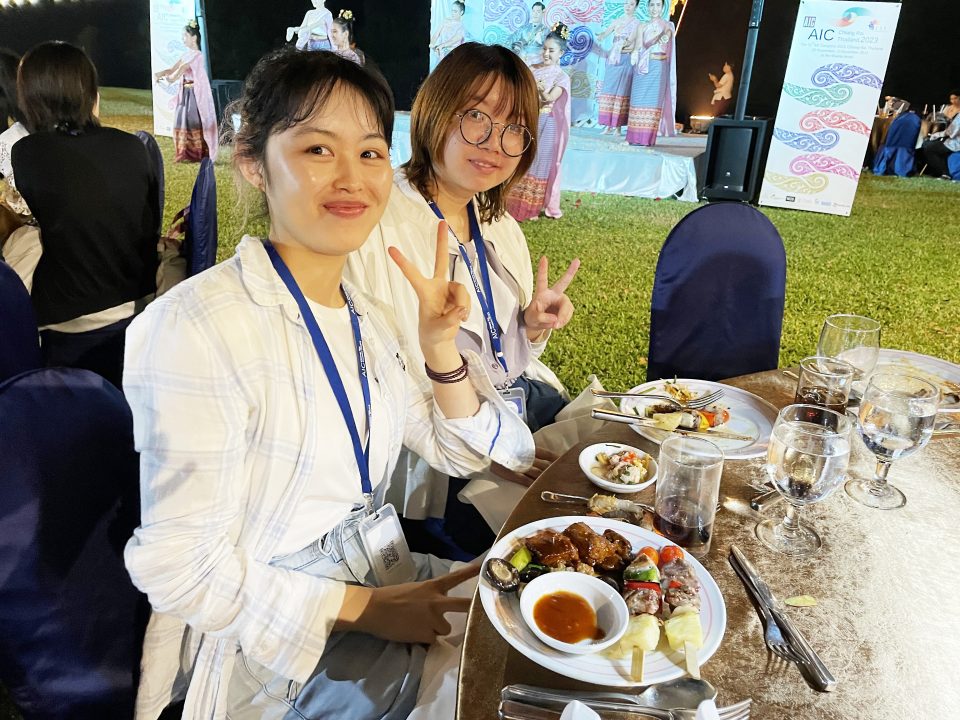
At the banquet of an international conference with fellow Kawasumi Lab member Yizhu Zhou (left)


What have you found most educational or beneficial so far?

I’ve found it especially educational to gain experience presenting my research at academic conferences, both in Japan and abroad. I also attended an international conference in Chiang Rai, Thailand, where I co-authored a poster presentation and helped explain it in English.


Is there anything you hope to challenge yourself with before completing your degree?

I’d like to focus on writing and presenting academic papers in English so I can present at international conferences. In June, I’m also scheduled to co-present at the Annual Conference of the Color Science Association of Japan, in Kyushu.


Is there anything you find inconvenient or, on the other hand, particularly comfortable about life in Japan?

The toilets are clean and easy to use. But warm toilet seats and washlets are already well-known in China, so I wasn’t too surprised! (laughs) Also, elevators and escalators exist in schools in China too, but they’re less commonly used. In Japan, I find myself using them more often.


I hear you’re working part-time at a strawberry candy shop. Have you had any difficulties or unpleasant experiences?

I started the job through a friend’s recommendation, and everyone there has been really kind, so I haven’t had any problems at all.


What are your dreams for the future?

I’d like to work in Shanghai someday, but I’m not sure if I’ll stay there permanently. Mostly, I want to give back to my parents, who have given me so many opportunities to grow.

With members of the Kawasumi Laboratory at an international conference (center)

[Interview Date] July 18, 2024