
Associate Professor Kouki Yonezawa teaches Software Engineering in the undergraduate program and Advanced Artificial Intelligence in the graduate program. We spoke with him about his research and his impressions of the students.
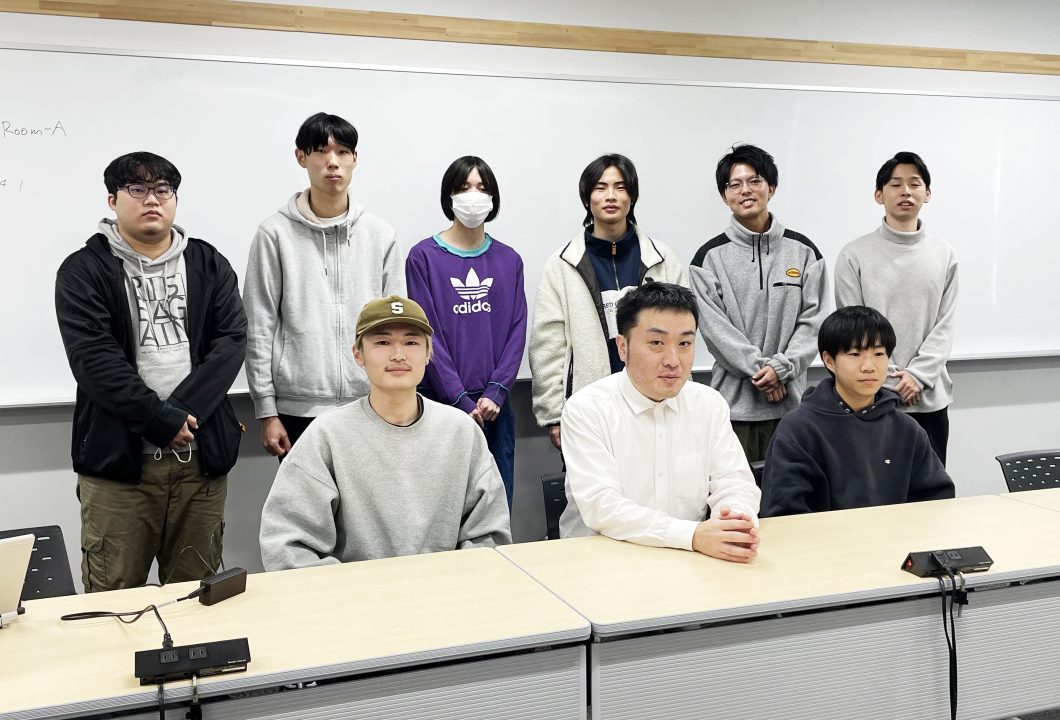
Associate Professor Kouki Yonezawa (center, front row) with fourth-year students from the Yonezawa Laboratory.
Could you start by introducing yourself?
As a student, I researched algorithms, working in a very traditional style with nothing more than paper and pencil. After that, my research expanded into collaborative filtering and biological data processing. Today, I focus on developing algorithms for processing massive datasets and discovering new insights through large-scale information analysis.
Outside of research, I enjoy watching sports and movies, which also serve as a source of inspiration for new research ideas. Sometimes, simply watching a game or a film is enough to spark a completely unexpected idea—it really does happen.
What kinds of sports and movies do you enjoy?
I mainly watch baseball these days, although I used to follow American football and basketball quite closely as well. In 2023, I went to Vantelin Dome in Nagoya to watch an interleague game against the Hokkaido Nippon-Ham Fighters. It was a memorable game—the winning run came on a rare bases-loaded walk.
As for movies, I enjoy a wide variety of genres. In addition to action films, I often watch comedies and horror movies, where it’s fascinating to see the creative ways filmmakers make the most of a limited budget.

Could you tell us about your field of expertise and what makes it interesting?
My research focuses on developing methods for processing massive amounts of data and discovering meaningful insights from them. What I find particularly fascinating is the wide variety of data that can be analyzed. My work ranges from highly serious datasets related to biology and viruses to entertainment-related data, such as sports and tabletop games.
In some cases, I have even shaped a student’s research project around a topic they were passionate about. As a result, we have analyzed datasets related to light novels and music as part of our research.
Could you tell us about some of your recent research projects?
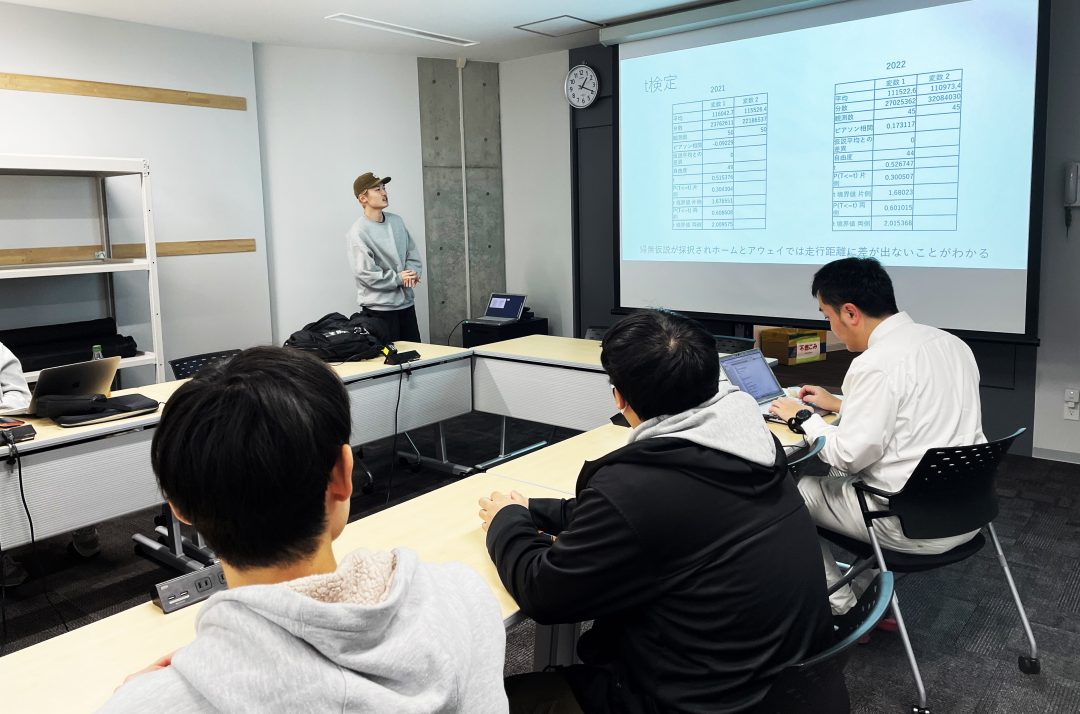
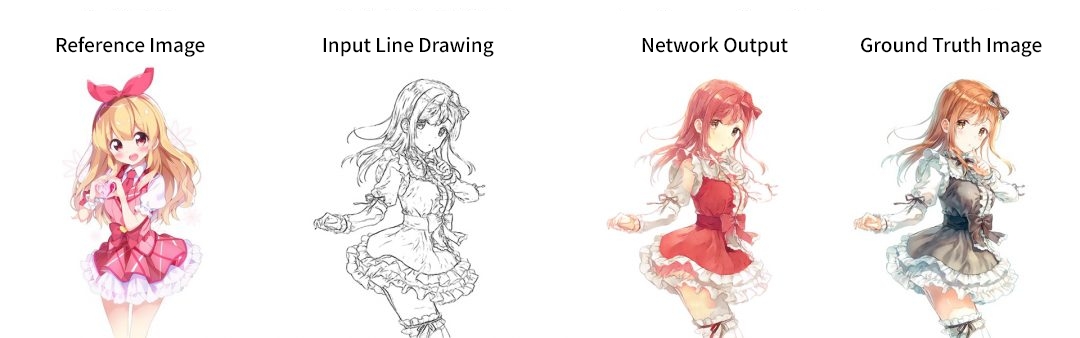
Recently, my research has included developing an automatic colorization method for anime line drawings, creating an automated method for identifying COVID-19 viruses, and developing knowledge discovery techniques using real-world data from Japan’s J.League.
One example is our work on automatic colorization for anime key drawings. We developed a neural network that takes a line drawing together with a color reference image of a different character and generates a fully colored version of the line drawing. Our experiments confirmed that the generated colors closely matched those of the reference image.
How do the knowledge and skills students acquire in your laboratory benefit them after graduation?
One important advantage is that students gain a solid foundation in statistics, an area in which students majoring in information engineering often have limited experience. This knowledge is highly valuable and continues to be useful after graduation.
Beyond technical knowledge, students learn how to think independently and drive their own research. This is fundamentally different from simply following instructions in lectures or laboratory classes. Through research, they gain experience in trial and error, adapting plans as circumstances change, and solving problems on their own—skills that remain essential throughout their professional careers.
What are your impressions of the students in the Faculty of Information Engineering at Meijo University?
Before joining Meijo University, I taught at other universities, and I have found that many students in the Faculty of Information Engineering here have strong programming skills. Overall, I also feel that they possess solid analytical and critical thinking abilities.
Another quality that stands out is their determination to tackle and complete the tasks they are given. In fact, I believe this resilience is one of the most important qualities for success in the workplace. On the other hand, I think there is still room for improvement in presentation skills. Since many students have had relatively few opportunities to present their work, this is an area where they can continue to develop.